From AI theory to real-world solutions with AI-LAB
On the Design and Application of Artificial Intelligence programme at Aalborg University, students use AI-LAB to turn theoretical knowledge into practical solutions. The platform gives them the extra computing power needed to develop AI, work on real-world challenges and gain hands-on experience with tools they may encounter in their future careers.
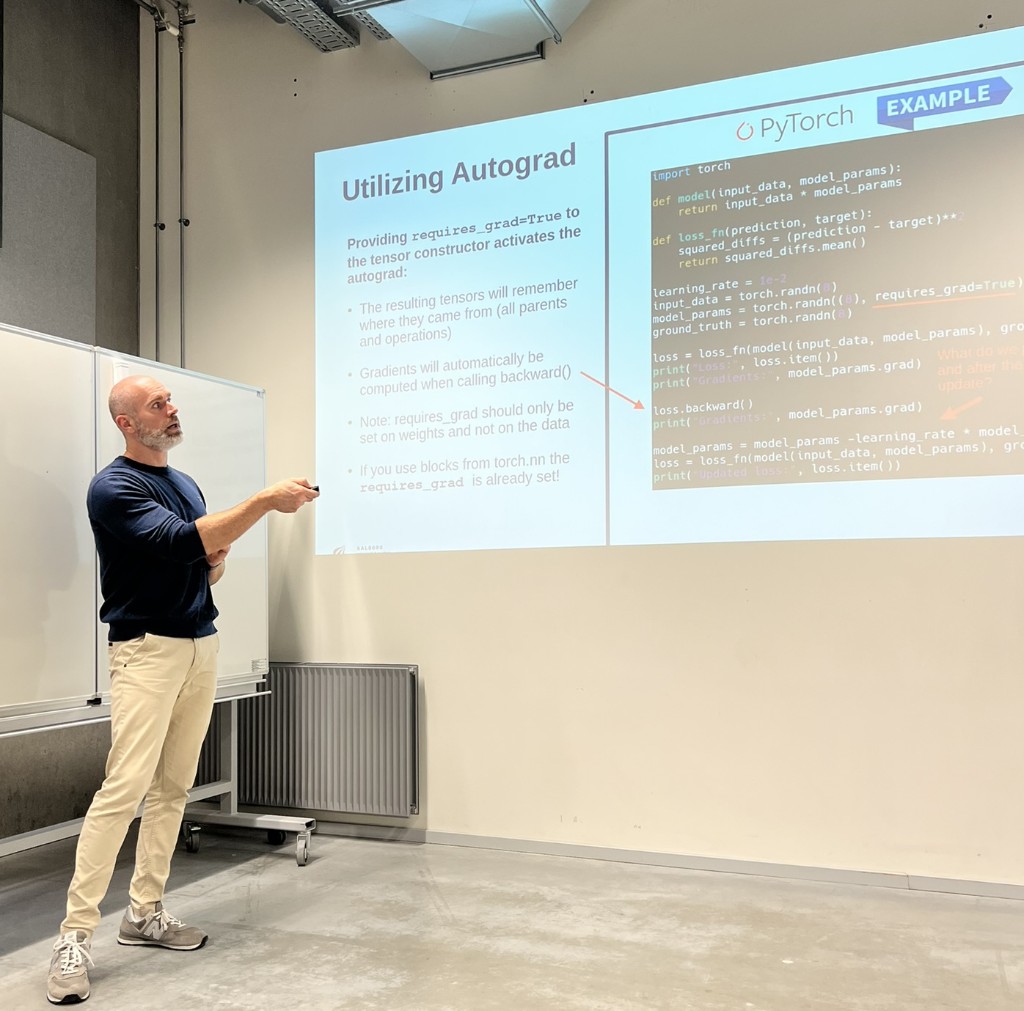
AI-LAB as a tool for hands-on learning
On the programme, the students learn to design and implement AI models that can help address real-world challenges, but understanding the theory is not enough. They also need the opportunity to develop, test and improve their solutions in practice, which is where AI-LAB comes in. Andreas Aakerberg, Assistant Professor at Aalborg University, uses the platform as an integrated part of the Deep Learning course.
AI-LAB is Aalborg University’s High Performance Computing platform for teaching. It gives educators and students access to the extra computing power needed to develop AI models, process images and video, analyse large datasets and run simulations.
For Andreas Aakerberg, AI-LAB is essential for turning theory into practice:
“The Deep Learning course in the Design and Application of Artificial Intelligence programme combines theoretical understanding with hands-on experience in developing artificial neural networks, and AI-LAB plays a central role in this process. Training modern AI models requires substantial computing power, which AI-LAB provides through specialised GPUs. For students on the Deep Learning course, AI-LAB is what a saw is to a carpenter or a microscope to a laboratory technician: an indispensable tool that makes it possible to turn theory into practice.”
Making experimentation possible
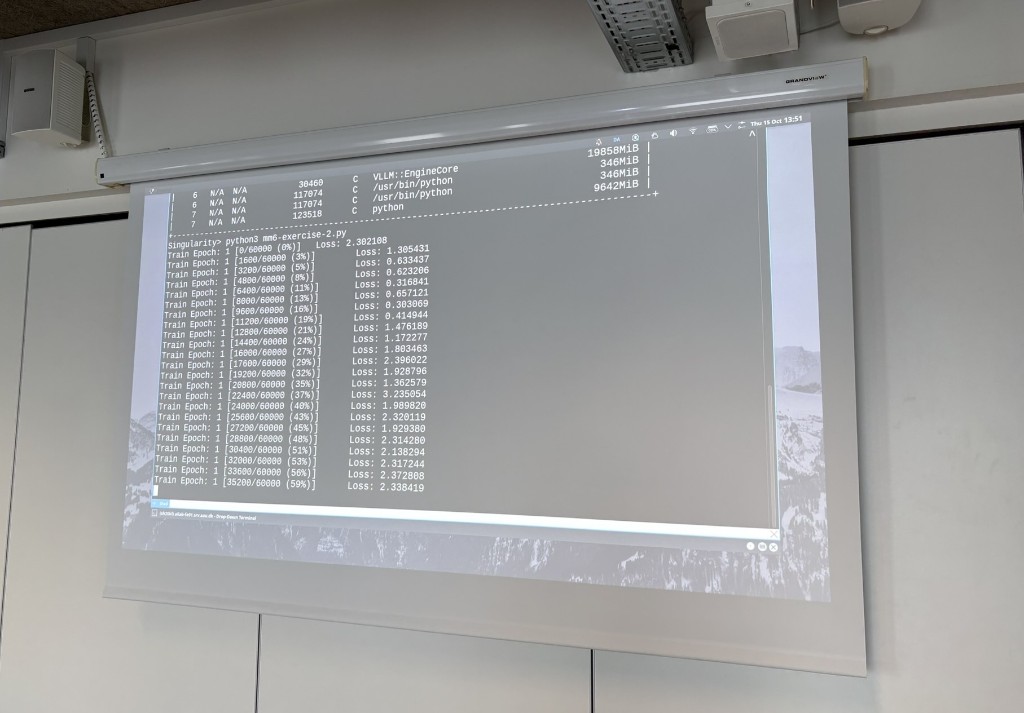
During their third semester, the students move from learning about deep learning to developing AI solutions themselves. Deep learning is a form of AI that learns to recognise complex patterns in data using artificial neurons. For many, AI-LAB is their first encounter with a terminal and a professional computing environment, where they can run their code and see their ideas take shape.
“We use AI-LAB actively throughout the course. I may, for example, give the students incomplete code that they have to finish and get working, or code containing errors that they need to identify and correct. At the same time, they learn to work through a terminal and navigate the type of computing environment they may encounter later in their careers.”
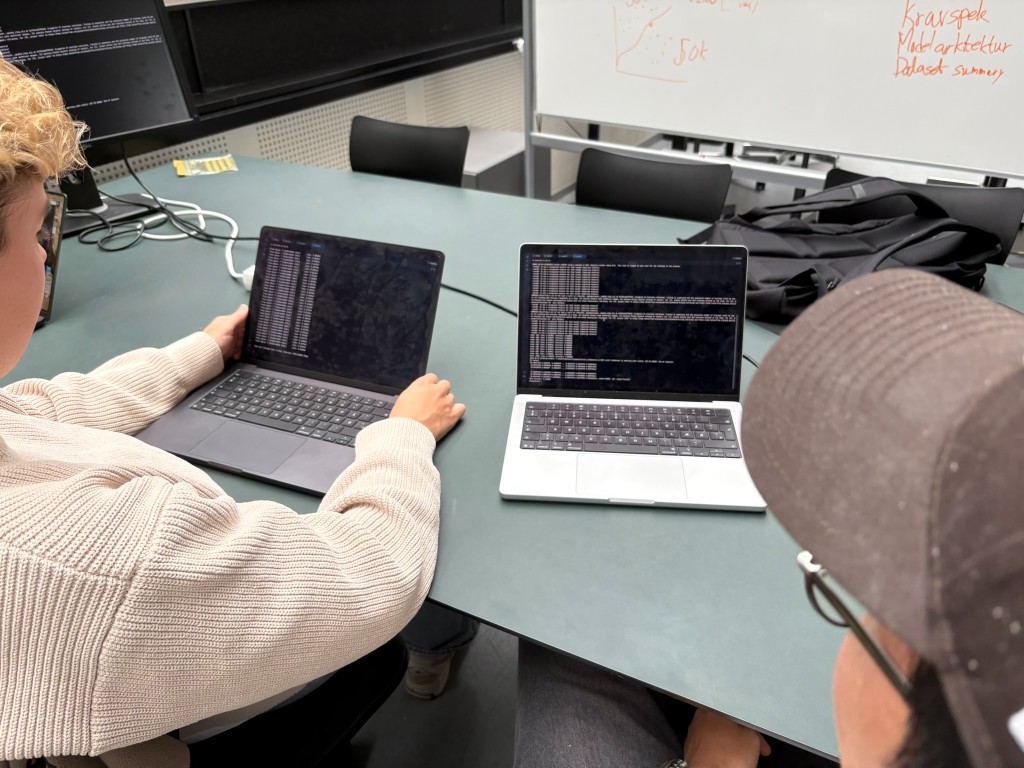
Experimentation is essential in deep learning because the right settings cannot always be determined in advance. Students must try different approaches, evaluate the results and adjust their models.
“A task that takes approximately ten minutes on AI-LAB could take an entire day on a regular laptop. At that speed, the students would not be able to test and adjust their models within the time available. It is therefore not only a question of completing the work faster. Without AI-LAB, they would not realistically be able to carry out the practical AI work required by the course.”
A platform built for teaching
AI-LAB has been designed with many GPUs, which provide the computing power needed for demanding tasks such as developing and testing AI models. Because these resources can be shared among many users, several students can work hands-on with AI at the same time.
“The platform is well suited to teaching because it has many GPUs. When a class of 30 or 40 students uses AI-LAB, they can all get hands-on experience at the same time. That is more important for teaching than having only a few, more powerful GPUs.”
A shared platform also gives students more equal conditions for participating in the course. They do not need to own a laptop with a powerful graphics card because the necessary computing resources are available through AI-LAB.
Applying AI to real-world challenges
Students continue to use AI-LAB after the Deep Learning course, including in semester projects where they design and implement AI solutions to concrete problems. Many of these projects are completed in collaboration with companies and address challenges with wider societal relevance.
One project explored whether drones and AI could support the maintenance of wind turbine blades. Instead of sending a person to inspect a blade manually, a drone could capture images that an AI model could analyse to identify potential damage and determine whether repairs might be necessary.
Another project used data from cement production to explore whether AI could identify opportunities to improve the production process and reduce its environmental impact. Even relatively small improvements can be significant when applied to production on a large scale.
“The students do not begin these projects with a predetermined AI model. They begin with a real problem, which they must define and narrow down before determining how data and AI can contribute to a solution.”
Preparing students for professional AI work
The experience gained through AI-LAB goes beyond completing a course or semester project. It introduces students to the tools and computing environments they may encounter in their future careers.
“We are educating engineers who need a practical AI toolbox. The HPC environment is part of that toolbox because it reflects how they will work with AI in the real world.”
Some technical challenges only arise when working with GPUs or distributing tasks across several computing resources. By encountering and solving these challenges during their education, students become better prepared for professional AI work.
For Andreas Aakerberg, access to AI-LAB is therefore essential:
“It is not a nice-to-have, but a need-to-have. It would be like educating a surveyor without giving them anything to measure with. If we want to educate people to understand and work with AI, they need access to the tools required to do it in practice, and AI-LAB provides exactly that.”
Support for bringing HPC into teaching
Both educators and students at Aalborg University can access AI-LAB. CLAAUDIA supports educators who want to incorporate HPC into their teaching and helps them prepare to use the platform with their students.
Are you considering incorporating AI or other computationally demanding activities into your teaching?
Learn more about AI-LAB and how to get started here, or contact CLAAUDIA for guidance on whether the platform is suitable for your course.